


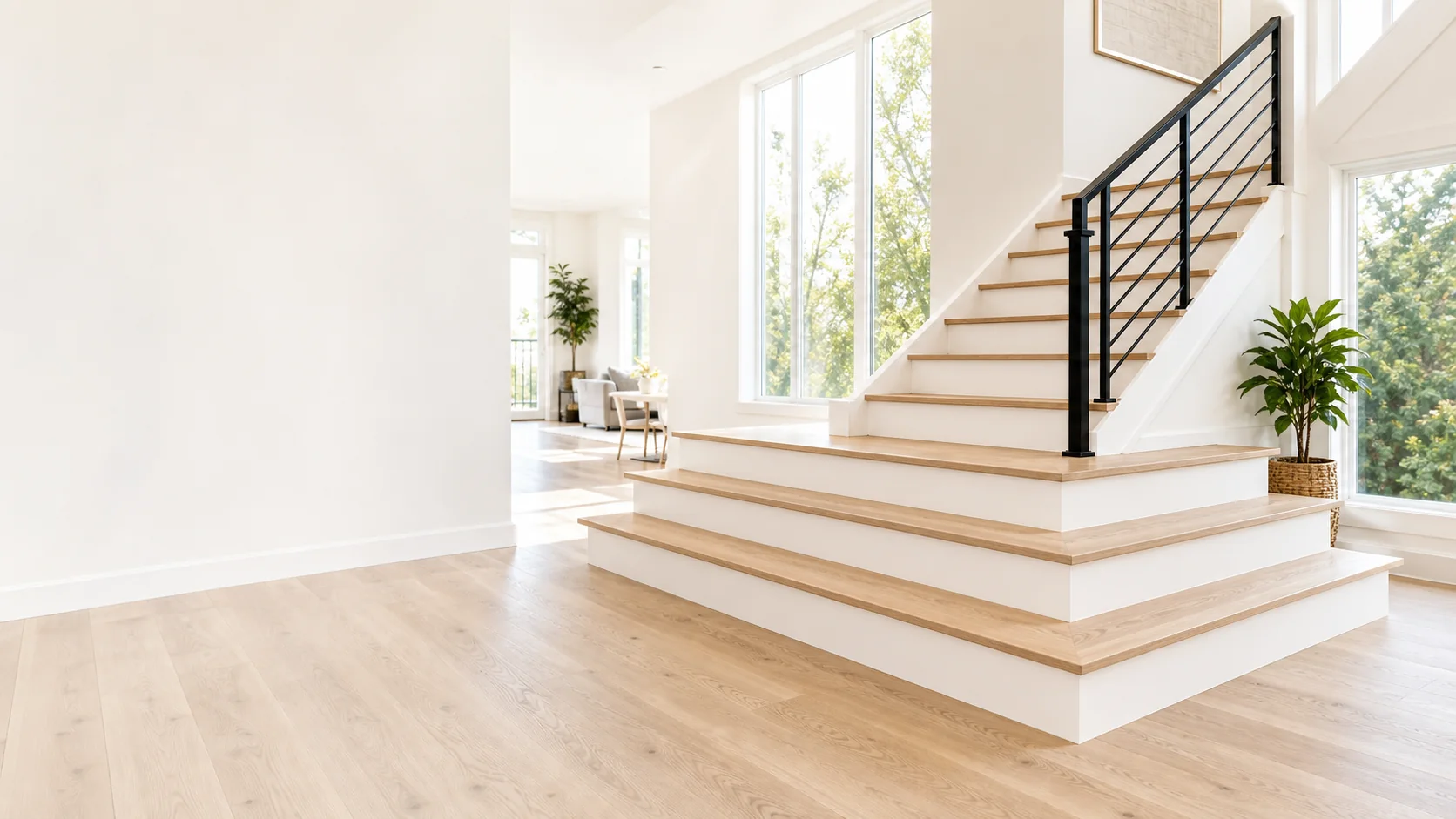
Update your stairs.
No demo required.
The cap squarenose installs directly over your existing tread — no full demolition needed. Worn, stained, or carpet-covered stairs become clean and finished in a fraction of the time and cost.
Caps over what's there.
Looks brand new.
The cap squarenose is a purpose-built stair tread that bonds directly to your existing stair surface. No removal of the old tread. No major demolition. Just a clean, finished wood-look result over solid structure.
It's milled with a flat underside that seats perfectly over plywood or solid wood treads, with the same square nose overhang profile as a traditional tread replacement — so the finished stair is visually indistinguishable from a full rebuild.
- No full tread demolition required
- Bonds directly to existing substrate
- Traditional square nose front edge profile
- Available in hardwood, engineered wood, and LVP
- Matched to your adjacent flooring
Less disruption.
Lower cost.
Same result.
When the stair structure is sound, there's no reason to tear it out. Capping is the smarter retrofit — faster to install, easier on your home, and easier on your budget.
More budget-friendly
Less demolition labor, no disposal of old material. The existing tread stays in place, cutting the overall project cost while delivering a fresh, finished look.
Faster installation
Skipping the tear-out phase means less time on your staircase and less dust in your home. Most cap squarenose projects are completed in a single day.
Finished appearance
A properly installed cap squarenose is indistinguishable from a replacement tread on the surface. The stair looks updated, clean, and professionally finished.
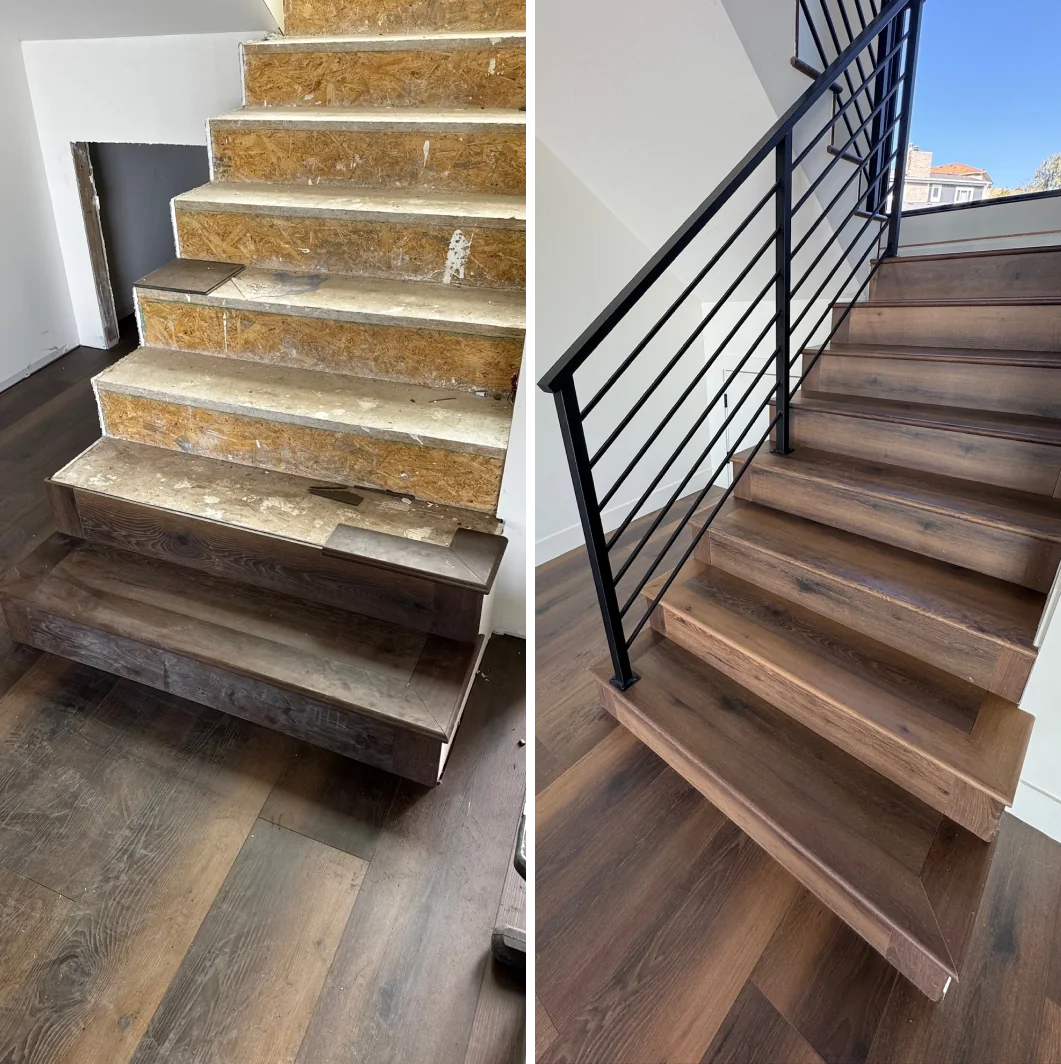
From worn carpet
to finished wood.
Every cap squarenose project starts with a site visit to confirm the stair structure is solid and the substrate is suitable. Once FIR gives the green light, installation moves quickly — with real results that speak for themselves.
Send photos of your current stairs and FIR will assess whether capping is the right path — or whether a full replacement makes more sense for your staircase.
carpet stair
Matched to your floor.
Built for your stairs.
Cap squarenose treads are available in hardwood, engineered hardwood, and LVP stair planks. FIR selects the material based on your stair construction, adjacent flooring, and Florida humidity conditions.
Warmth and character
Solid hardwood caps work well over plywood or existing wood treads. Available in oak, maple, and other domestic species to match or complement your flooring.
Florida-ready stability
Engineered hardwood caps resist humidity-driven expansion better than solid wood — important in Florida homes where seasonal moisture levels fluctuate significantly.
Waterproof and consistent
LVP stair cap planks offer full waterproofing and a consistent color match with LVP flooring on adjacent levels. Best for homes replacing carpet with LVP throughout.
From estimate
to finished stairs.
Send photos + details
Share photos of your stairs, step count, existing flooring, and your city. FIR responds the same day with an assessment and a preliminary range.
On-site visit
FIR confirms the stair substrate is suitable, takes measurements, and reviews material options matched to your home. No obligation at this stage.
Installation day
Caps are bonded, fastened, and finished. Most projects wrap in a single day. You get clean, updated stairs — without the disruption of a full remodel.

Installed by FIR.
Backed by experience.
Flow Interior Remodeling is a local Tampa Bay flooring and stair company — not a franchise, not a big-box referral. Every project is assessed and overseen by Victor, who has been doing stair work in Florida homes since 2018.
When FIR says capping is the right call, it's because the substrate was inspected and the numbers were checked. When it's not, you'll hear that too — along with the better option for your specific staircase.
Real results,
real homeowners.
"Our stairs went from old carpet to beautiful wood-look treads. The whole job was done in one day and the quality is outstanding."
"Victor was honest about what we needed — caps made more sense for our staircase than a full replacement. Saved us money and looks great."
"Fast, clean, professional. No mess left behind and the LVP treads match our floors perfectly. Exactly what we wanted for the price we expected."
Cap squarenose,
answered.
Can a cap squarenose go over carpet stairs?
No — the carpet and padding must be removed first so the cap can bond directly to a solid substrate. Once the carpet is off, FIR assesses the existing tread to confirm it's level, clean, and structurally sound before capping proceeds.
Will it affect the stair height or step rise?
The cap adds thickness — typically ¾″ to 1″ depending on material. FIR measures the existing riser height and cap thickness together to confirm the finished step height remains in a comfortable, code-compliant range for your staircase.
How is the cap secured to the existing tread?
Cap treads are typically adhesive-bonded and fastened with finish nails or screws depending on the substrate. FIR uses the method appropriate for your material and stair construction to ensure the cap is tight, stable, and creak-free.
When is full replacement better than a cap?
If the existing tread is damaged, soft, uneven, or structurally compromised, capping over it is not the right call. FIR will tell you this at the estimate stage — and recommend the appropriate standard square nose or full replacement path instead.
Which material is best for Florida homes?
Engineered hardwood or LVP are most common in Florida — engineered wood handles humidity fluctuation better than solid wood, and LVP is fully waterproof. FIR will help you match the right material to your existing floors and moisture conditions.
Do you serve the Sarasota area too?
Yes. FIR serves the full Tampa Bay area and the Sarasota region — including Bradenton, Lakewood Ranch, St. Petersburg, Clearwater, and surrounding ZIP codes. Send your location with your estimate request and FIR will confirm coverage.
Ready to upgrade
your stairs?
Send photos of your current stairs and FIR will assess whether capping is the right path — or whether a full replacement is warranted. Either way, you get a clear estimate before any work begins.
Mon–Sat · 8a–6p · Same-day estimate response